Modern education is evolving rapidly as educators search for methods that prepare students for real-world challenges. Project-Based Learning (PBL) has emerged as a powerful teaching approach that focuses on active exploration, collaboration, and practical problem-solving.
Instead of relying solely on lectures and memorization, PBL encourages students to investigate real-world questions and develop meaningful projects that demonstrate their understanding. This approach helps learners connect academic concepts with real-life applications, making education more engaging and effective.
What is Project-Based Learning?
Project-Based Learning (PBL) is an instructional method in which students gain knowledge and skills by working on extended projects centered around complex questions or real-world problems.
In this approach, students are not passive recipients of information. Instead, they actively research, design, analyze, and present solutions. Teachers act as facilitators and guides, supporting students as they explore topics in depth.
Key elements of Project-Based Learning include:
- Investigation of real-world problems
- Student-centered learning
- Collaboration and teamwork
- Research and critical thinking
- Creation of a tangible product or presentation
Through these elements, students learn not only academic content but also essential life skills.
Core Principles of Project-Based Learning
Successful implementation of PBL relies on several foundational principles.
1. Real-World Relevance
Projects are designed around authentic challenges or problems that mirror real-life situations. This makes learning more meaningful and motivates students to engage deeply with the topic.
2. Student Voice and Choice
Students often have the freedom to select topics, methods, or final products. This autonomy increases ownership and motivation in the learning process.
3. Inquiry and Exploration
PBL emphasizes curiosity-driven investigation. Students ask questions, conduct research, analyze data, and develop conclusions based on evidence.
4. Collaboration
Most projects require teamwork. Students work together to share ideas, divide responsibilities, and solve problems collectively.
5. Reflection and Revision
Students reflect on their learning process and refine their projects based on feedback. This encourages continuous improvement and deeper understanding.
Key Benefits of Project-Based Learning
Project-Based Learning offers several educational advantages that extend beyond traditional instruction.
Improved Critical Thinking
Students must analyze information, evaluate solutions, and make decisions during the project process. This strengthens analytical and problem-solving skills.
Greater Student Engagement
Hands-on projects make learning more dynamic and enjoyable. Students are more likely to stay motivated when they actively participate in meaningful tasks.
Development of Real-World Skills
PBL helps students develop essential skills such as:
- Communication
- Leadership
- Collaboration
- Time management
- Research and data analysis
These skills are highly valued in modern workplaces.
Deeper Understanding of Concepts
Rather than memorizing facts, students apply knowledge in practical contexts, leading to better retention and comprehension.
Steps to Implement Project-Based Learning in the Classroom
Teachers can introduce PBL effectively by following a structured process.
1. Identify a Driving Question
Start with a challenging and open-ended question that encourages investigation. For example:
“How can our school reduce its environmental impact?”
2. Plan the Project Structure
Define learning objectives, project milestones, timelines, and assessment criteria.
3. Facilitate Research and Exploration
Guide students as they gather information through:
- Books and academic resources
- Interviews and surveys
- Field observations
- Experiments and data collection
4. Encourage Collaboration
Organize students into teams where they can discuss ideas and share responsibilities.
5. Create and Present the Final Product
Students present their findings through formats such as:
- Research reports
- Multimedia presentations
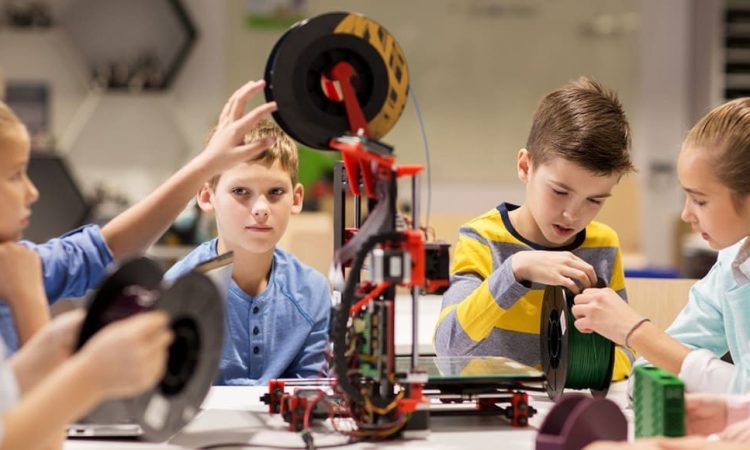
- Models or prototypes
- Community campaigns
6. Evaluate and Reflect
Assessment should consider both the final product and the learning process. Reflection helps students understand what they learned and how they can improve.
Examples of Project-Based Learning Activities
PBL can be applied across different subjects and grade levels.
Science Project
Students design a small-scale renewable energy model and analyze its efficiency.
History Project
Students create a documentary exploring the social impact of a historical event.
Mathematics Project
Students plan a budget for a community event, applying real-world calculations and financial planning.
Environmental Project
Students develop a recycling initiative for their school or neighborhood.
These activities allow learners to integrate academic knowledge with practical problem-solving.
Challenges of Project-Based Learning
While PBL offers many benefits, educators may face certain challenges when implementing it.
Time Management
Projects often require more time than traditional lessons. Teachers must carefully balance curriculum requirements and project timelines.
Assessment Difficulties
Evaluating group projects can be complex. Clear rubrics and individual reflections help ensure fair assessment.
Resource Availability
Some projects may require materials, technology, or community involvement that schools may not always have readily available.
Despite these challenges, careful planning can make PBL highly successful.
The Future of Project-Based Learning
As education shifts toward skills-based and experiential learning, Project-Based Learning is becoming increasingly important.
Advancements in technology, digital collaboration tools, and global connectivity allow students to work on projects that address real-world global issues, from climate change to social innovation.
Schools that adopt PBL are better equipped to prepare students for dynamic careers and lifelong learning.
Frequently Asked Questions (FAQs)
1. What makes Project-Based Learning different from traditional teaching?
Traditional teaching often focuses on lectures and memorization, while Project-Based Learning emphasizes hands-on projects, inquiry, and real-world problem solving.
2. Is Project-Based Learning suitable for all subjects?
Yes. PBL can be adapted to subjects such as science, mathematics, language arts, history, and even vocational training.
3. How long does a typical PBL project last?
Projects may last from a few days to several weeks, depending on the complexity and learning objectives.
4. How do teachers assess student performance in PBL?
Teachers typically use rubrics, peer evaluations, presentations, and reflection journals to evaluate both the project outcome and the learning process.
5. Does Project-Based Learning improve academic performance?
Research suggests that PBL can improve conceptual understanding, engagement, and long-term knowledge retention.
6. What skills do students gain from Project-Based Learning?
Students develop critical skills including teamwork, communication, research, creativity, and problem-solving.
7. Can Project-Based Learning be used in online education?
Yes. Digital tools such as collaborative platforms, virtual simulations, and video presentations make online PBL projects highly effective.